What Rhodiola Rosea Is
Rhodiola rosea is a flowering plant native to the cold mountainous regions of Europe, Asia, and North America, used for centuries in Scandinavian and traditional Russian medicine as an adaptogen — a compound that helps the body and mind resist physical and mental stress without sedation or stimulation. Its primary bioactive compounds are salidroside and rosavins (rosavin, rosin, rosarin), which are standardised in modern supplements typically to 3% rosavins and 1% salidroside.
Unlike pharmaceutical cognitive enhancers that amplify one neurotransmitter system at the cost of others, Rhodiola acts as a regulatory adaptogen that normalises the stress response when it is overactivated — reducing the cognitive performance costs of mental fatigue and stress without producing dependence, tolerance, or the crash cycle of stimulants. This regulatory mechanism is why Rhodiola’s cognitive benefits are most pronounced in people experiencing cognitive fatigue and mental stress rather than in people at rest.
The Mental Fatigue Problem
Mental fatigue is one of the most common and most functionally debilitating cognitive complaints among working adults. It represents a progressive decline in cognitive performance quality — slower processing speed, more errors in attentional tasks, worse working memory, poorer decision-making — that develops over the course of sustained cognitive work and is accompanied by increasing subjective difficulty and effort. Mental fatigue is not simply tiredness but a specific state of neural resource depletion that impairs the quality of cognitive output even when the person is motivated and alert.
The neurobiological basis of mental fatigue involves adenosine accumulation in brain regions involved in sustained attention (signalling the need for sleep), cortisol dysregulation from prolonged HPA axis activation under cognitive stress, and depletion of neurotransmitter precursor pools under sustained demand. Each of these mechanisms reduces the efficiency of neural computation, producing the familiar experience of cognitive performance that progressively deteriorates through demanding days.
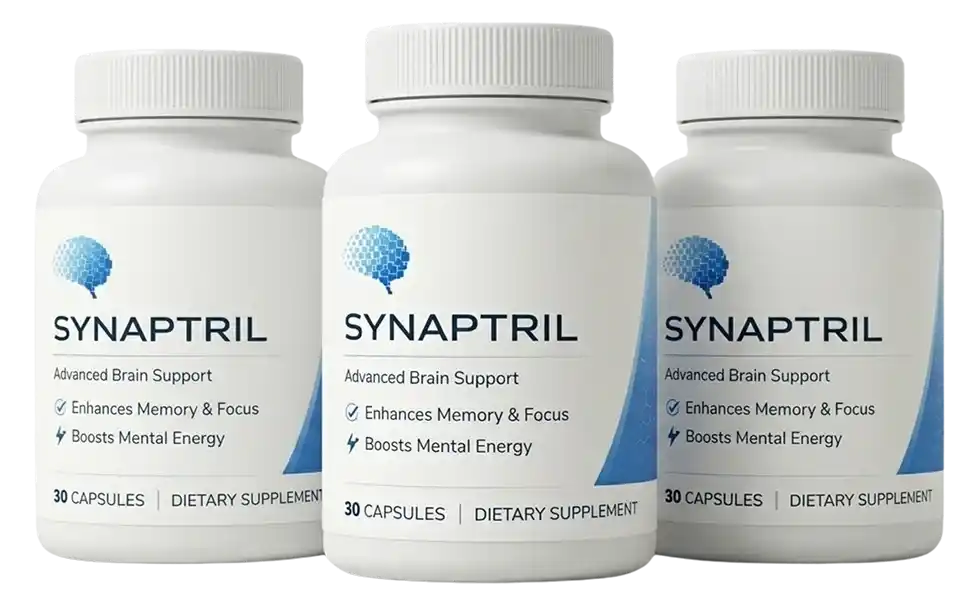
Discover Synaptril’s complete 8-ingredient cognitive formula and 60-day guarantee.
🧠 View SynaptrilRhodiola's HPA Axis Mechanism
Rhodiola’s primary cognitive mechanism operates through modulation of the hypothalamic-pituitary-adrenal (HPA) axis — the neuroendocrine system that coordinates the body’s response to stress by releasing cortisol and other glucocorticoids from the adrenal cortex. The HPA axis was designed for acute stress responses (threats, physical exertion, brief crises) but performs poorly when chronically activated by the sustained cognitive demands of modern professional life. Chronically elevated cortisol impairs prefrontal cortex function (the brain region most critical for executive function, working memory, and sustained attention), reduces hippocampal neurogenesis, and disrupts the neurotransmitter balance that cognitive performance requires.
Salidroside and rosavins in Rhodiola modulate HPA axis reactivity by influencing cortisol release at the pituitary and adrenal levels, preventing the cortisol overshoot that sustained mental stress produces. Multiple studies have measured reduced salivary cortisol responses to mental stress protocols in Rhodiola groups compared to placebo, accompanied by maintained cognitive performance on tasks that the placebo groups showed significant deterioration on. This “stress resilience without sedation” mechanism is what distinguishes Rhodiola from both stimulants (which amplify the stress response) and sedatives (which blunt arousal non-selectively).
Clinical Evidence for Cognitive Effects
Rhodiola’s anti-fatigue cognitive evidence base is among the strongest of any adaptogenic ingredient. A 2000 randomised controlled trial by Darbinyan et al. (published in Phytomedicine) found that Rhodiola supplementation significantly improved performance on cognitive capacity tests, associative thinking, short-term memory, concentration, and speed of audiovisual perception in physicians on night duty, compared to placebo. A 2003 trial by Shevtsov et al. found significant improvements in cognitive function under mental stress in healthy students during exam periods. A systematic review published in Phytomedicine (2011) reviewing 11 RCTs found consistent evidence for Rhodiola’s anti-fatigue effects across populations.
Dose and Effect Relationship
Rhodiola’s anti-fatigue effects are most consistently demonstrated at doses of 200–600mg standardised extract daily. Effects on mental fatigue resistance and cognitive performance under stress appear to develop over 2–4 weeks of consistent daily use, with acute effects also documented in single-dose studies, suggesting both immediate and cumulative mechanisms of action.
Rhodiola vs Caffeine for Mental Fatigue
Caffeine is the most widely used anti-fatigue compound in the world, but its mechanism — adenosine receptor antagonism — masks the signals of mental fatigue rather than addressing its neurobiological causes. The familiar caffeine crash occurs because adenosine accumulates behind the blockade and rebounds when caffeine is metabolised, producing a rebound fatigue state that is often worse than the initial fatigue. Tolerance develops with regular caffeine use, requiring escalating doses for equivalent effects.
Rhodiola’s adaptogenic mechanism does not produce tolerance, does not mask underlying fatigue (it reduces actual cognitive performance deterioration, not just the perception of effort), and does not produce rebound fatigue after its effects wane. For people seeking sustained cognitive performance support through demanding days without the dependency and crash cycle of caffeine, Rhodiola provides a mechanism that is fundamentally different from and complementary to caffeine rather than a weaker version of the same thing.
Rhodiola in Synaptril
In Synaptril’s formula, Rhodiola Rosea occupies the mental fatigue resistance and cognitive stress resilience role — addressing the HPA axis dimension of cognitive performance that none of the formula’s other ingredients (Bacopa, Ginkgo, Phosphatidylserine, Alpha GPC, L-Theanine, B Complex) specifically target. While L-Theanine modulates arousal and reduces acute anxiety, Rhodiola’s adaptogenic mechanism operates at the neuroendocrine level to prevent the chronic cortisol dysregulation that undermines sustained cognitive performance across demanding weeks and months. The combination of Rhodiola’s stress resilience with L-Theanine’s alpha-wave promotion creates a comprehensive cognitive composure layer within Synaptril’s broader formula.
Discover Synaptril’s complete 8-ingredient cognitive formula and 60-day guarantee.
🧠 View SynaptrilFurther reading
- Synaptril Brain Supplement: Complete User Guide
- How Synaptril Supports Memory: The Science Explained
- Alpha GPC for Focus and Cognition: What Research Shows
- Rhodiola Rosea and Mental Fatigue: Evidence Review
- Best Time to Take a Brain Supplement for Results
- Cognitive Decline Prevention: Diet and Supplement Strategies
More on the Synaptril blog. Visit the official site for pricing and guarantee details.